smartlockmarket.com

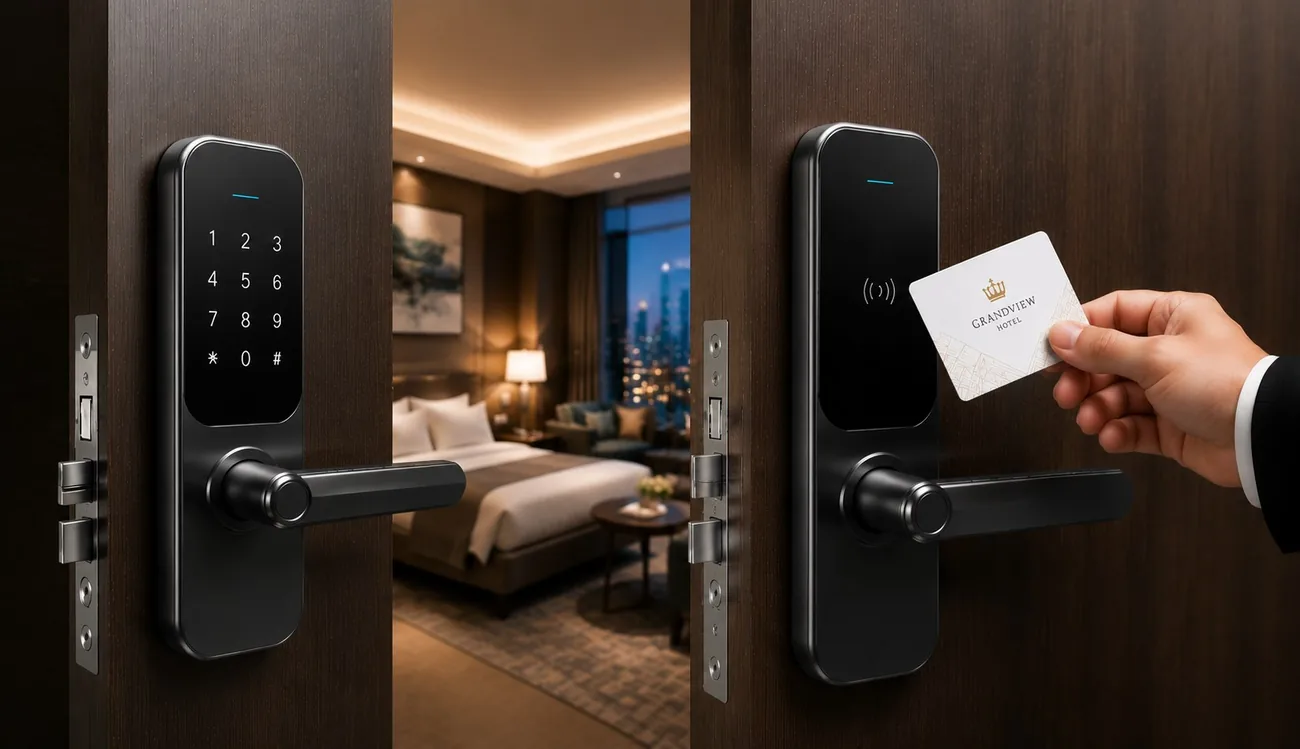
Hotel Password vs Card Locks: Front-Desk Credential Guide
Once you decide guest rooms need hotel electronic locks—not fingerprint hardware—the next question is different: should credentials be RFID cards, keypad passwords, or both on one series?
This is a front-desk operations decision. Card locks optimize encoding speed and familiar guest habits. Password locks optimize remote / late check-in and remove card logistics. The wrong default creates night-support tickets, shared PINs, or encoder bottlenecks.
Use this guide when you are specifying guest-room unlock methods for hotels, hostels, boutique stays, and serviced apartments. For biometric vs card decisions on mixed buildings, read our hotel card locks vs fingerprint locks guide.
Editorial scope: Updated July 31, 2026 for B2B hotel-lock selection. Features such as remote code generation, PMS integration, audit records, and offline fallback vary by system; confirm them on the exact lock, gateway, software, and subscription plan being quoted.
8
1. Start From the Check-In Model
Write the arrival process before you pick a keypad or RFID reader.
- Staffed front desk, peak queues: card encoding is usually faster for guests who expect a keycard.
- Remote / late arrival, light desk: pre-sent stay-window codes reduce lobby traffic and card handoff.
- Mixed inventory: standard rooms on card (or card+password), late-arrival suites on password primary.
If the property markets “check in after midnight without waiting,” password delivery is part of the product offer—not an accessory feature.
2. Credential Lifecycle: Code vs Card
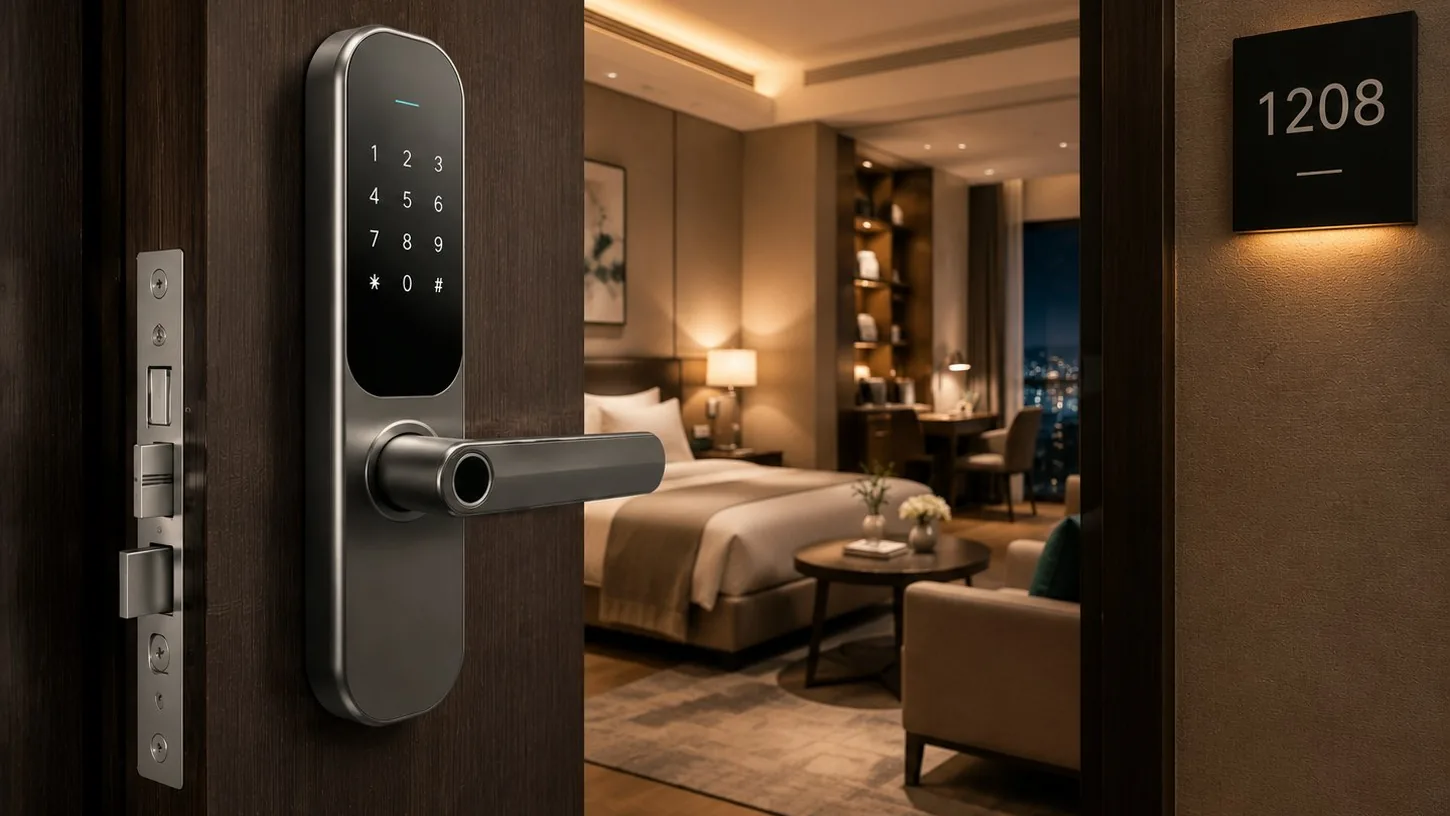
Password locks create a time-limited or one-time code delivered by SMS, email, app, or paper slip. Guests enter digits on a keypad. There is no card to encode, lose, or reissue—but there is a delivery channel and a delete/expiry process to manage.
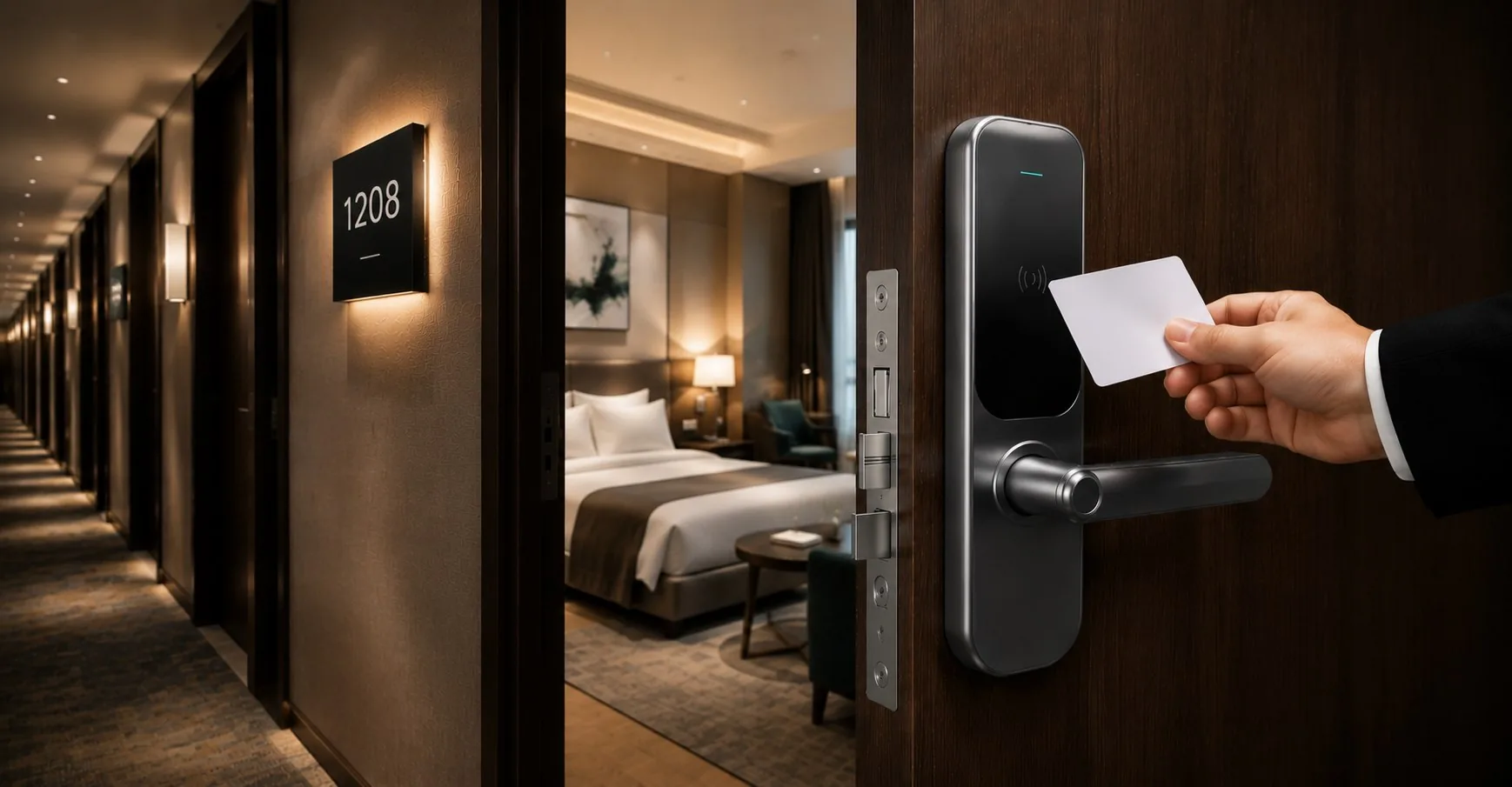
Card locks encode RFID/IC cards with room number and stay window. Checkout voids or expires access. Staff cards keep hierarchy (guest / floor / master) without rewriting every room overnight.
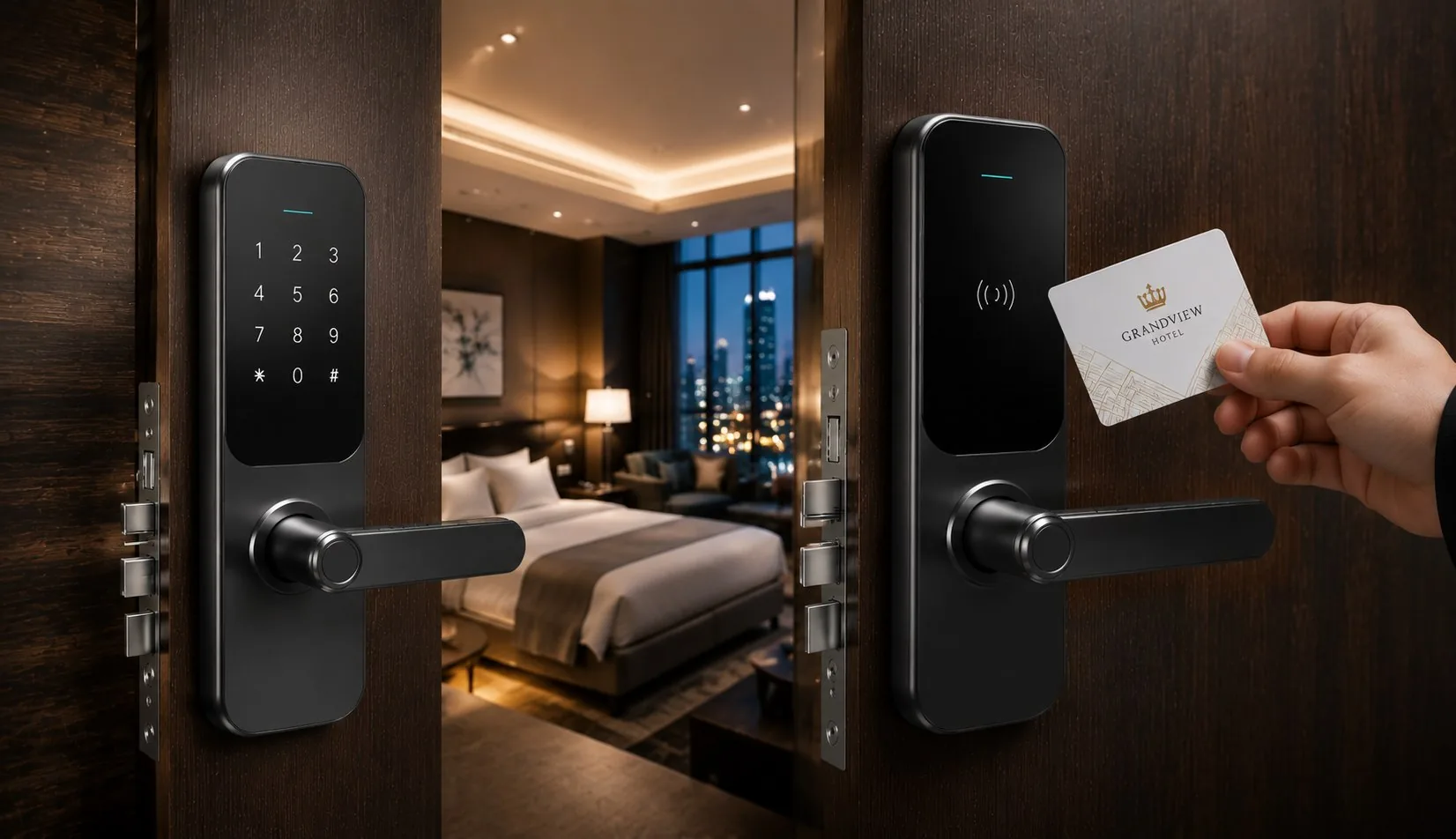
| Lifecycle step | Password credential | RFID card credential |
|---|---|---|
| Issue | Generate + deliver code | Encode card at desk / kiosk |
| Guest action | Enter digits | Tap card |
| Revoke | Expire / delete / rotate code | Expiry, void, or re-encode |
| Consumable | None | Cards + encoder supplies |
| Typical fail mode | Forgotten code, shared PIN | Lost card, encoder downtime |
Offline, gateway, and cloud code workflows
“Password lock” can describe several different operating models. An offline algorithmic system may generate time-bound codes without contacting the lock for every issue. A Bluetooth model may require a nearby phone for management. A gateway-connected or cloud-managed model may support remote issue and revoke, but then depends on gateway placement, internet service, account permissions, and the vendor’s platform.
| Workflow | Operational advantage | Verify before buying |
|---|---|---|
| Offline time-bound code | No live connection required for each guest arrival | Clock accuracy, code rules, expiry behavior, emergency revoke process |
| Bluetooth management | Simple local setup and audit sync | Who must be near the door, phone permissions, lost-admin-phone recovery |
| Gateway / cloud | Remote code issue, status, and possible audit access | Gateway coverage, internet fallback, subscription, roles, data retention |
| RFID encoder | Fast front-desk issue for high turnover | PMS fit, card type, encoder drivers, offline check-in procedure |
Do not assume a Wi-Fi icon means every door connects directly to the cloud. Ask for a system diagram showing the lock, phone, encoder, gateway, router, server, and PMS connection. That diagram should match the quoted hardware and the country where the system will operate.
3. Security Reality: Sharing vs Lost Cards
Neither method is automatically safer. Security follows expiry rules and revoke speed.
- Password risk: long-lived shared PINs, shoulder surfing, screenshot sharing in group chats.
- Card risk: lost cards before void, weak staff-card discipline, encoder left unlocked.
- Controls that matter: stay-window expiry, one-time codes where possible, role-based staff credentials, mechanical key override policy.
Procurement should reject any plan that relies on one static code reused across guests.
4. Front-Desk Labor and Night Arrivals
Card systems concentrate labor at check-in: encode, hand over, re-encode replacements. That works when the desk is staffed and the PMS/encoder link is stable.
Password systems move labor to code delivery and night support—“code not working” calls. They win when arrivals are staggered and remote handoff is part of the brand promise.
Measure both: average encode time × daily arrivals, versus average support tickets × after-hours coverage cost. The cheaper unit price rarely decides the winner.
Design the failure path before rollout
Every credential flow needs a recovery path that front-desk and night staff can execute without calling the factory. For password rooms, document what happens when a code is mistyped, delivered late, expired by a clock mismatch, or cannot be revoked remotely. For card rooms, cover lost cards, encoder failure, PMS downtime, and a guest arriving while the network is unavailable.
A pilot should test normal check-in, early arrival, stay extension, room change, checkout, lost credential, low battery, dead battery, gateway or encoder outage, and emergency opening. Record who performs each step, how long it takes, and which permissions are required. The result becomes the property’s standard operating procedure and training checklist.
5. Why Hybrid Series Win for OEM Buyers
For distributors and project buyers, a multi-mode hotel series (card + password + key override on one family) usually beats two unrelated SKUs.
- One mortise / finish language across the corridor
- Fewer spare modules and battery types
- Door-by-door mode choice without redesigning hardware
- Easier OEM branding and packaging consistency
Specify which mode is primary per door type in the purchase order—do not leave it to installers on site.
6. Property-Type Playbook
- Full-service city hotel / resort: RFID card primary; password as backup or for selected suites
- Boutique / Airbnb-style: password primary; card for staff and VIP handoff
- Serviced apartments: password + card hybrid for remote handoff and short stays
- Budget hostels: card for high-turnover rooms; password only where desk coverage is thin
- Staff / back-of-house: password or card with clear role hierarchy and audit logs
7. Questions to Ask Before You Sample
- Can codes be stay-window limited and deleted without visiting the room?
- Does the encoder / software match our PMS or standalone front-desk process?
- What is the card + password hybrid behavior when one credential fails?
- Door thickness, handing, and mortise type confirmed for our doors?
- Battery life and low-power alerts under expected open/close cycles?
- Mechanical key override and emergency open SOP documented?
- Finish package and spare kit standardized across the order?
- Target-market certifications available for the exact sales configuration?
8. FAQ
Are password locks safer than card locks?
Not automatically. Safety depends on expiry rules and revoke speed. Time-limited cards and temporary codes both work; long-lived shared PINs are the real risk.
What should full-service hotels choose?
For many staffed, high-turnover properties, card locks or a card + password hybrid fit the existing front-desk workflow well. The final choice should follow the property’s PMS, arrival process, guest profile, and tested fallback procedure.
When do password locks win?
When remote or late check-in matters more than card logistics—boutique hotels, Airbnb-style units, and light front-desk properties.
9. Bottom Line
Choose credentials by check-in model, not by marketing feature lists. Cards still win for staffed, high-turnover hotels. Passwords win for remote arrival and zero-card logistics. Hybrid series often win for OEM/ODM buyers who need one spare-part language across door types.
Browse hotel keypad / password locks and hotel RFID locks, or contact us with room counts and door drawings before you sample.
For broader project planning, see Hotel Lock Solutions.